THE MUSIC OF THE MIND ITA – ENGLISH BELOW
La musica della mente
Questo blog nasce da un flash, una reverie fulminea! Un ricordo d’infanzia è apparso luminoso durante l’ascolto casuale di un frammento musicale; ha squarciato le porte della mia memoria sopita e ha rievocato in me la libertà e la meraviglia della prima infanzia.
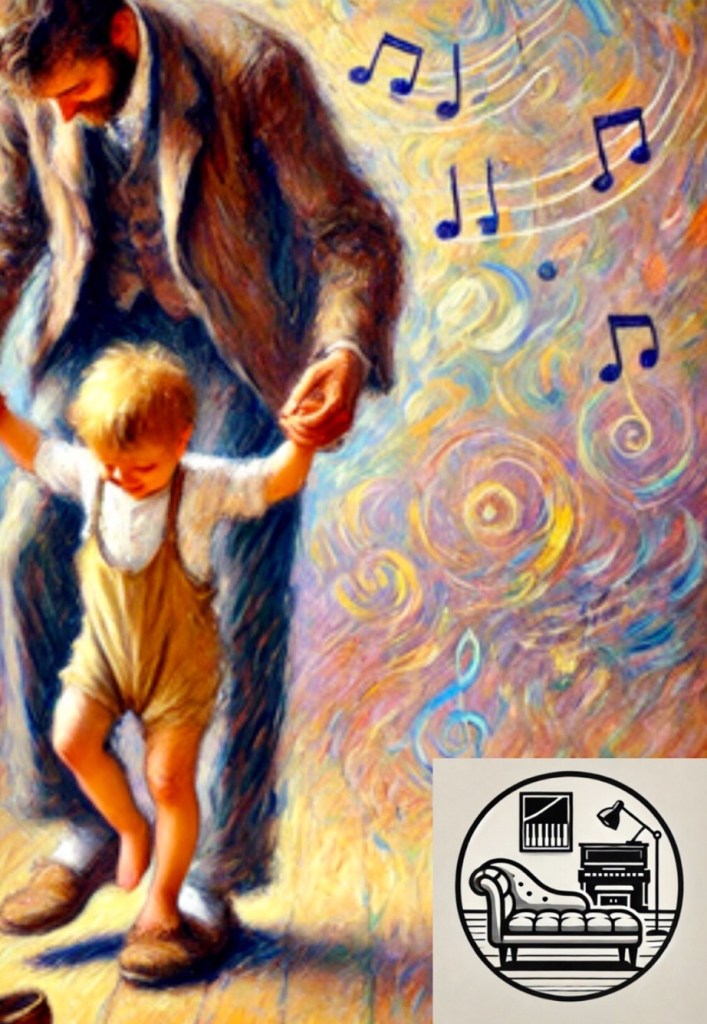
L’ascolto de “L’Apprenti Sorcier” di Dukas, noto anche per il suo adattamento da parte della Disney nel film “Fantasia” (nell’episodio in cui Topolino interpreta l’apprendista stregone), si è rivelato il “motivetto” che mio padre canticchiava mentre mi accompagnava a letto con una modalità tutta sua: mi faceva appoggiare i piedi sulle sue pantofole e camminava all’indietro, portandomi fino al mio lettino.
Sono convinto che ci siano momenti nella vita che restano impressi non per la loro grandezza o significatività intrinseca, ma per la loro intima connessione con noi, con il nostro modo di percepire il mondo, la realtà e noi stessi.
Da bambino, nei giochi sfrenati per casa, saltavo spesso tra divani e poltrone, perdendo di continuo le scarpe nella corsa. E quando arrivava l’ora di andare a letto, mio padre si avvicinava a me e, con un gesto che ho imparato ad amare, mi faceva appoggiare i piedi sui suoi e, camminando all’indietro, mi portava a dormire.
È da quel ricordo che ha preso forma questo spazio. Annotando piccoli frammenti dei successivi ascolti, per spasso, ho poi deciso di farne una raccolta, un luogo in cui musica, memoria e immaginazione si fondono, come facevano i passi sui piedi di mio padre. Questo è il significato di Reverie Sonore. Qui ogni spaesata emozione, ricordo, appunto, confronto è ben accetto.
Più che un progetto ordinato in sezioni, questo spazio si costruisce come una serie di “attraversamenti”. A volte l’ascolto genera immagini, visioni, tracce poetiche; altre volte si aprono riflessioni che sfiorano il pensiero psicoanalitico, applicato non alla clinica, ma all’arte, alla musica, all’umano.
Le chiameremo “frivolezze psicoanalitiche”: appunti liberi, interpretazioni leggere solo in apparenza, nate da quel particolare stato della mente in cui il suono si trasforma in senso, e il pensiero si lascia contaminare dall’esperienza estetica.
Non si tratta di spiegare un brano musicale né di ricostruirne la storia o il contesto d’origine, quanto piuttosto di lasciarsi toccare dalle sue risonanze interiori e osservare ciò che ne emerge, nell’immaginazione, nella sensibilità, nella forma che l’ascolto assume in chi vi si abbandona.
In questo modo, la rêverie si fa lente d’ingrandimento, e la psicoanalisi torna a essere ciò che è sempre stata: uno strumento per comprendere l’umano nella sua complessità, nel suo disordine, nel suo desiderio di verità.
Ma più ancora che dal ricordo, questo spazio è nato da ciò che esso ha saputo risvegliare.
L’ascolto improvviso di quel frammento musicale non generò una rêverie nel senso più consueto del termine: non fu una fantasticheria, né una deriva associativa. Fu piuttosto un insight, qualcosa che si impose con una semplicità sorprendente, intensa e silenziosa al tempo stesso.
Non si trattò di ricordare soltanto, ma di rivivere, per un attimo,la sensazione precisa di dolcezza, protezione, affidamento. Una sicurezza piena, che non si era limitata al passato, ma che in quel momento si fece nuovamente presente. Come se quel gesto paterno, quell’incedere a due piedi, potesse ancora accadere, in un altro tempo, dentro di me.
E non contava che fossi adulto, né che avessi imparato a badare a me stesso. Non era rilevante che, forse, continuassi a cercare quell’aiuto fuori da me. Quello che emerse fu altro: la possibilità,rimasta silente ma intatta, di fidarmi ancora.
In quell’istante si incrinò una certezza amara che si era andata depositando nel tempo: l’idea di essere ormai incapace di affidarmi veramente, di essere chiuso al contatto più intimo, separato da ogni spontaneo quanto indomito atto di tenerezza. Quel frammento sonoro non mi restituì un ricordo: mi restituì una possibilità.
Fu da lì che, poco a poco, cominciarono ad affiorare immagini, stati d’animo, pensieri. Alcuni si presentarono come intuizioni, altri come semplici vibrazioni. Frammenti di senso che nel tempo avrebbero preso la forma delle rêverie.
Non come esercizio estetico, e neppure come meditazione affettiva, ma come modalità dell’essere: piccole aperture attraverso cui il mondo interno si lascia attraversare dalla musica, e la musica diventa, senza volerlo, forma di conoscenza.
—
The Music of the Mind – ENG
This blog was born from a flash, a sudden reverie! A childhood memory surfaced brightly during the casual listening of a musical fragment; it broke through the gates of my dormant memory and evoked in me the freedom and wonder of early childhood.
Listening to Dukas’ “The Sorcerer’s Apprentice,” also known from its Disney adaptation in the film “Fantasia” (in the episode where Mickey plays the apprentice), revealed itself to be the very tune my father would hum as he accompanied me to bed in his own peculiar way: he had me place my feet on his slippers and walked backward, carrying me to my little bed.
I’m convinced there are moments in life that remain imprinted not for their greatness or intrinsic significance, but for their intimate connection with our way of perceiving the world, reality, and ourselves.
As a child, I would often leap wildly between sofas and armchairs, constantly losing my shoes in the frenzy. And when bedtime came, my father would approach and, with a gesture I came to love, let me place my feet on his and carried me, walking backward, to sleep.
It is from that memory that this space took shape. I began noting small fragments of later listenings just for fun, and then decided to collect them, a space where music, memory, and imagination could blend, just like those steps on my father’s feet. This is the meaning of Reverie Sonore. Here, every disoriented emotion, memory, note, and reflection is welcome.
Rather than a structured project with strict sections, this space unfolds as a series of crossings. At times, listening gives rise to images, visions, poetic traces; other times it opens onto reflections that brush against psychoanalytic thinking, not applied to clinical work, but to art, music, and the human condition.
We will call them “psychoanalytic frivolities”: free notes, interpretations that are only apparently light, born from that particular mental state where sound becomes meaning, and thought lets itself be shaped by aesthetic experience.
This is not about explaining a piece of music, nor about reconstructing its history or context, but about allowing oneself to be touched by its inner resonances and observing what emerges, in the imagination, in sensitivity, in the form that listening takes on for those who surrender to it.
In this way, reverie becomes a magnifying glass, and psychoanalysis returns to what it has always been: a tool for understanding the human being in their complexity, in their disorder, in their desire for truth.
But more than from memory, this space was born from what the memory awakened.
The sudden listening of that musical fragment didn’t produce a reverie in the usual sense: it wasn’t a daydream, nor a stream of associations. It was rather an insight, something that imposed itself with a surprising simplicity, both intense and silent.
It wasn’t merely about remembering, but about reliving, for an instant, the precise sensation of sweetness, protection, trust. A deep sense of safety, not confined to the past, but made present again. As if that paternal gesture, that two-footed pace, could still happen, in another time, within me.
It didn’t matter that I was an adult, nor that I had learned to take care of myself. It wasn’t relevant that, perhaps, I continued to seek that help outside of myself. What emerged was something else: the possibility, silent yet intact, of trusting again.
In that instant, a bitter certainty that had taken root over time was shaken: the idea of being no longer able to truly trust, of being closed off to intimate contact, detached from every spontaneous and untamed act of tenderness. That sonic fragment didn’t give me back a memory: it gave me back a possibility.
From there, little by little, images, moods, and thoughts began to emerge. Some arrived as intuitions, others as simple vibrations. Fragments of meaning that, in time, would take the form of reveries.
Not as an aesthetic exercise, nor as affective meditation, but as a mode of being: small openings through which the inner world lets itself be crossed by music, and music becomes, unintentionally, a form of knowledge.
The music becomes a gesture
Vuoi ricevere le nuove Rêverie sonore direttamente nella tua email?
• Would you like to receive new Reverie Sonore posts straight to your inbox?

 Reverie Sonore
Lascia un commento