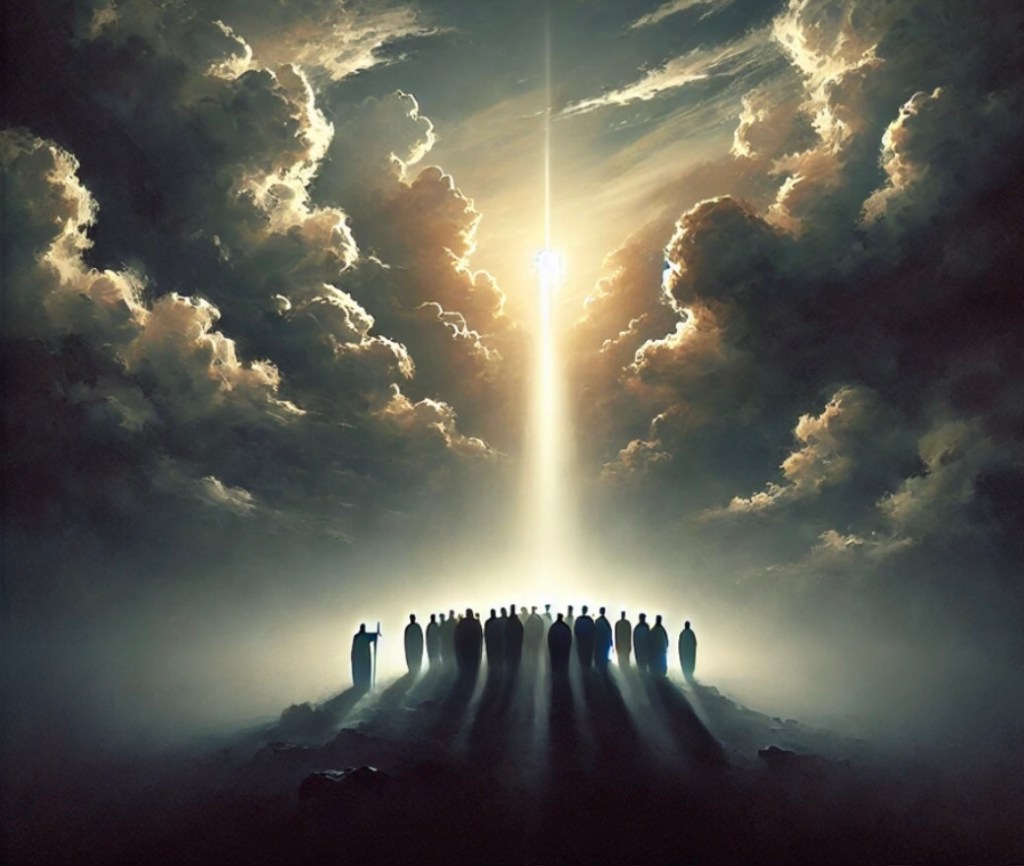
IT:
Figure umane sulla soglia del mistero: la luce non giudica, ma accoglie.
EN:
Human figures at the threshold of mystery: the light does not judge—it welcomes
“Io sono la luce che è sopra tutti. Io sono il Tutto. Il Tutto è uscito da me e il Tutto è tornato a me. Spacca un legno, io sono là. Solleva una pietra, mi troverai.”
Vangelo secondo Tommaso, loghion 77
Quella che segue non è una preghiera né un testo sacro, ma una rêverie affiorata durante l’ascolto del Requiem di Fauré. Come accade a volte nella profondità dell’esperienza estetica, alcune immagini interiori sono emerse spontaneamente, evocando, senza nominarli, i toni e le atmosfere di parole sacre conosciute solo per frammenti. È come se la mente, colpita dalla musica, avesse tentato di ricordare il Vangelo secondo Tommaso o un Salmo, ma senza averli realmente a memoria. Da questa confusione emotiva è nata una sorta di riscrittura interiore, fragile e intensa, che solo dopo ha ritrovato una sorta di corrispondenza nei testi autentici, che abbiamo in parte inserito.
Ascolto consigliato:
Gabriel Fauré – Requiem, Op. 48
Philharmonia Orchestra & Chorus
Direttore: Carlo Maria Giulini
Soprano: Kathleen Battle
Baritono: Andreas Schmidt
Etichetta: Deutsche Grammophon, 1986
Puoi ascoltare questa registrazione su Spotify:
Oppure su YouTube:
Reverie spontanea
Preghiamo. Il Dio che preghiamo nessuno lo vede. Non si può vedere. Noi crediamo. I sorrisi dei padri hanno parlato di lealtà, la nostra fede è oltre il buio. Preghiamo che l’amore sia. Il mistero è dischiuso, la verità non va cercata. Il silenzio stilla nascondigli dove nessun altro può vedere. Alziamo la volontà, il nostro credo non è solo. Scaccia ogni dubbio, la verità non può ferire. Accogliamo ogni malvolenza, le nostre gesta sono già state predette. L’Uomo non uomo è qui con noi. Il tempo non è mai esistito. Colui che è, è stato invitato al nostro convivio, non temete! Accanto, gli uni agli altri vinceremo ogni sorte. Le luci del cielo travolgono i nostri credo lasciati germogliare nella terra.
Voci notturne. Bagliori, ombre, sussurri, volti. Camminiamo ancora. Chi ci salverà ci darà un segno! Il cielo è sereno, il Dio verrà. Chiamo il tuo nome, ripeto le tue parole. “Sia fatto in memoria di me”. Le mie gesta sono le tue. L’umanità è dinnanzi. Ora, unitevi. Ognuno ha bisogno di essere, cerchiamo Colui che è!
Fui uomo, fratelli, fui Verità e silenzi; conobbi il male per mostrare la via. Siate il sorriso ingenuo, tremate la paura d’un mondo finito. Amate ogni dove, il tempo non finirà. Se il giorno finisse ai miei occhi, alcun giorno conoscerebbe luce. Tu, uomo, sii gentile. Cerca la carezza in ogni creatura, dimentica i tuoi incubi, i limiti sono lì affinché anche tu possa poi scorgere il volto luminoso dell’amore. Sii luce silenziosa, partecipe dell’incanto. Abbandona ogni altro credo!
Salmo 85, 11–13
Amore e verità s’incontreranno, giustizia e pace si baceranno. La verità germoglierà dalla terra e la giustizia si affaccerà dal cielo. Certo, il Signore donerà il suo bene e la nostra terra darà il suo frutto.
Commento
Il Requiem di Fauré non ci conduce nel lutto, ma nella soglia. Non rappresenta la morte, la dissolve. Non teme l’oltre, ma lo abita. In questo spazio sospeso, dove il suono non cerca di significare ma di essere, affiora un pensiero che non si fonda più sul negativo, ma su una forza affermativa, creatrice, silenziosamente generativa.
Sotto la direzione di Giulini, l’opera si fa mitezza assoluta: un’energia contemplativa che accarezza l’invisibile, senza sovraccaricarlo di pathos. Non c’è un Dies Irae. Non c’è giudizio. Solo un respiro, una promessa che non si impone.
Se la tradizione filosofica moderna ha affidato al negativo la struttura stessa del pensiero, da Hegel ad Adorno, passando per Heidegger, Gilles Deleuze compie un atto di rottura: non è più il conflitto, la mancanza o la negazione a generare il senso, ma la differenza stessa, come principio primo. In Differenza e ripetizione, egli contesta l’idea che il pensiero sorga da una dialettica tra tesi e antitesi, tra presenza e assenza, tra essere e nulla. Il negativo, in questa prospettiva, non è che una funzione derivata, un prodotto secondario di un ordine rappresentazionale che ha bisogno del limite per pensare.
Contro questa logica binaria, Deleuze propone un’ontologia del divenire, dove la differenza è intensità, variazione, tensione, non opposizione. Pensare, in questo orizzonte, non significa più trovare ciò che qualcosa non è, ma seguirne il movimento, le metamorfosi, le fughe. Non è la negazione che fonda, ma la molteplicità che emerge senza fondamento.
Il concetto di divenire, allora, si oppone alla dialettica non perché nega il negativo, ma perché lo supera in apertura: il divenire non cerca una sintesi, non attende una conciliazione, non costruisce un’identità. Esso si muove attraverso, tra, oltre. Ecco il senso profondo della deterritorializzazione: un soggetto che non si costituisce attraverso confini, ma nell’attraversamento di essi. Non più l’essere che si nega per giungere a sé, ma il senso che si forma nel suo stesso slittare.
In questo quadro, il pensiero stesso si fa campo di immanenza, dove non c’è fondamento né finalità, ma solo una costellazione mobile di forze, di incontri, di affetti. Pensare è rispondere a un evento, non rinchiuderlo in un concetto. È essere toccati, non dominare.
In questo paesaggio fluido, Deleuze introduce il concetto chiave di movimento aberrante, che sarà poi elaborato con forza da David Lapoujade. “Aberrante” non è deviante rispetto a una norma , è generativo di senso prima della norma, prima della forma. È l’irruzione di qualcosa che non si può ancora dire, ma che già orienta, disloca, fa vibrare il pensiero.
Lapoujade scrive: “Il movimento aberrante non reagisce: fa esistere ciò che non esiste ancora.” È qui che la soggettività emerge come intensità prima che forma: non come punto di vista, ma come traiettoria. L’identità non è una condizione iniziale, ma una sedimentazione di attraversamenti.
La rêverie che apre questo ascolto è, in fondo, un movimento aberrante: una voce che non parla da un io, ma da uno spazio che eccede l’io stesso. È una soglia. E soglia, qui, significa: luogo dove si disgrega ciò che è già noto e si comincia a percepire ciò che ancora non è linguaggio. Il pensiero, nella musica di Fauré, non argomenta: si forma come possibilità sensibile.
La spiritualità che affiora in questa soglia non è dogmatica né dottrinale. È un pathos dell’apertura, un’etica del non sapere, un desiderio di aderire senza possedere.
In modo sorprendentemente affine, la psicoanalisi di Wilfred Bion ci porta in uno spazio teorico altrettanto radicale. Il cuore della sua riflessione è O: ciò che non può essere conosciuto, solo incontrato. O non è un contenuto dell’inconscio, ma una verità che può essere vissuta solo in uno stato di apertura estrema, priva di pregiudizi, concetti, risposte.
Per stare in contatto con O, Bion parla di capacità negativa: una condizione dell’analista (e forse dell’essere umano) in cui si tollera l’ignoto, l’ambiguità, l’assenza di appigli. Non si interpreta subito. Si attende. Si contiene.
In questa attesa nasce la funzione alfa: la possibilità di trasformare un’esperienza grezza (elemento beta) in qualcosa che può essere pensato, raccontato, condiviso. Non si tratta di dare un significato prestabilito, ma di generare la possibilità del senso.
In questo, la rêverie dell’analista gioca un ruolo fondamentale: accoglie l’esperienza dell’altro come un grembo simbolico, lo trattiene nella mente e nel corpo, e lo restituisce in forma di connessione affettiva.
Il Requiem di Fauré, in questa prospettiva, è rêverie musicale. Contiene senza spiegare. Trasforma senza interpretare. Non dà risposte, ma rende abitabile il mistero.
Forse è questo il nostro compito, oggi: non comprendere tutto, ma non fuggire davanti a ciò che ci attraversa. Non pretendere che il dolore abbia un senso, ma lasciare che sia accolto. Non aspettarsi la redenzione, ma preparare uno spazio dove qualcosa possa fiorire senza essere subito riconosciuto.
Una spiritualità del possibile non salva, non redime, non consola. Ma accompagna, ascolta, trasforma. È la cura silenziosa dell’invisibile. È la soglia che respira. È la luce che non grida, ma permane.
Un’etica del silenzio che contiene.
Un’etica dell’ascolto che non possiede.
Un’etica dell’essere attraversati.
ENGLISH
Fauré, Beyond Negativity: A Spirituality of the Possible in the Requiem
“I am the light that is above all. I am the All. The All has come forth from me and the All has returned to me. Split a piece of wood—I am there. Lift a stone, and you will find me.”
Gospel of Thomas, Logion 77
What follows is neither a prayer nor a sacred text, but a rêverie that emerged while listening to Fauré’s Requiem. As sometimes happens in the depths of aesthetic experience, certain inner images surfaced spontaneously, echoes of sacred words remembered only in fragments. It was as if the mind, stirred by the music, had tried to recall the Gospel of Thomas or a Psalm, without truly knowing them by heart. Out of that emotional confusion, a kind of inner rewriting was born, fragile, intense, and only later found resonance in the original texts.
Suggested Listening
Gabriel Fauré – Requiem, Op. 48
Philharmonia Orchestra & Chorus
Conductor: Carlo Maria Giulini
Soprano: Kathleen Battle
Baritone: Andreas Schmidt
Label: Deutsche Grammophon, 1986
You can listen to this recording on Spotify:
Or on YouTube:
Spontaneous reverie
We pray. The God we pray to cannot be seen. He cannot be seen. But we believe. The smiles of the fathers spoke of loyalty, our faith lies beyond the dark. We pray that love may be. The mystery is unveiled; truth is not to be sought. Silence drips into hidden places no one else can see. We raise our will, our belief is not alone. Banish every doubt: truth cannot wound. Let us embrace every hostility; our deeds have already been foretold. The Man not-man is here with us. Time has never been. He who is has been invited to our feast, fear not! Side by side, we shall overcome every fate. The lights of the sky overwhelm our beliefs, left to sprout in the earth.
Night voices. Flickers, shadows, whispers, and faces. Still we walk. The one who will save us will give a sign! The sky is clear, God will come. I call your name, I echo your words: “Do this in memory of me.” My deeds are yours. Humanity stands before us. Now, unite. Each one needs to be. Let us seek the One who Is!
I was man, brothers, I was Truth and silence; I knew evil to show the way. Be the innocent smile, tremble in fear of a world ending. Love in every place. Time will not end. If day were to vanish from my eyes, no day would know light. You, man, be kind. Seek the gentle touch in every creature. Forget your nightmares. The limits are there so that even you may glimpse the luminous face of love. Be silent light, a part of the wonder. Let go of every other belief!
Psalm 85: 11–13
Love and truth will meet, justice and peace will embrace. Truth shall spring up from the earth, and justice shall look down from heaven. Yes, the Lord will grant his good, and our land will yield its fruit.
Comment
Fauré’s Requiem does not lead us into mourning, but into a threshold. It does not represent death, it dissolves it. It does not fear the beyond, it inhabits it. In this suspended space, where sound seeks not to signify but simply to be, arises a thought no longer grounded in negativity, but in an affirmative, creative, quietly generative force.
Under Giulini’s direction, the work becomes utter gentleness: a contemplative energy that caresses the invisible without overburdening it with pathos. There is no Dies Irae. No judgment. Only breath, a promise that does not impose itself.
If modern philosophical tradition entrusted negativity with the very structure of thought, from Hegel to Adorno, through Heidegger, Gilles Deleuze breaks with it. It is no longer conflict, lack, or negation that generates meaning, but difference itself as a primary principle. In Difference and Repetition, he challenges the idea that thought arises through a dialectic of thesis and antithesis, presence and absence, being and nothingness. Negativity, in this view, is but a derivative function, a secondary product of a representational order that requires limits in order to think.
Against this binary logic, Deleuze proposes an ontology of becoming, where difference is intensity, variation, tension, not opposition. To think, in this framework, no longer means to identify what something is not, but to follow its movement, its metamorphoses, its escapes. It is not negation that grounds thought, but multiplicity emerging without a foundation.
The concept of becoming, then, does not negate dialectic but surpasses it in openness: becoming does not seek synthesis, nor await reconciliation, nor construct identity. It moves through, between, beyond. This is the deeper meaning of deterritorialization: a subject not constituted by boundaries, but by their traversal. No longer being negating itself to reach selfhood, but meaning arising in its own slipping.
In this light, thought becomes a field of immanence, devoid of foundations or ends, composed only of a mobile constellation of forces, encounters, and affects. Thinking means responding to an event, not enclosing it in a concept. It means being touched, not dominating.
In this fluid landscape, Deleuze introduces the key notion of aberrant movement, later expanded by David Lapoujade. “Aberrant” is not deviation from a norm, it is sense generated before any norm or form. It is the irruption of something not yet sayable, but already stirring, displacing, and resonating in thought.
Lapoujade writes: “Aberrant movement does not react; it brings into existence what does not yet exist.” Here, subjectivity arises as intensity before form: not as a viewpoint, but as a trajectory. Identity is not an initial condition, but a sedimentation of crossings.
The rêverie that opens this listening is, in a way, an aberrant movement: a voice not speaking from an “I,” but from a space that exceeds the self. It is a threshold. And threshold here means: a place where what is already known disintegrates and what is not yet language begins to be perceived. Thought, in Fauré’s music, does not argue: it emerges as sensitive possibility.
The spirituality that arises in this threshold is neither dogmatic nor doctrinal. It is a pathos of openness, an ethics of not-knowing, a desire to adhere without possessing.
Surprisingly, the psychoanalysis of Wilfred Bion takes us into a similarly radical theoretical space. At the core of his reflection lies O: that which cannot be known, only encountered. O is not a content of the unconscious, but a truth that can only be lived in a state of extreme openness—free of preconceptions, concepts, answers.
To stay in contact with O, Bion speaks of negative capability: a condition of the analyst (and perhaps of the human being) in which the unknown, the ambiguous, the lack of footholds can be endured. One does not interpret immediately. One waits. One contains.
Out of this waiting arises the alpha function: the ability to transform raw experience (beta elements) into something that can be thought, told, shared. It is not about assigning meaning, but about generating the possibility of meaning.
In this, the analyst’s rêverie plays a fundamental role: it welcomes the experience of the other like a symbolic womb, holds it in mind and body, and returns it in the form of affective connection.
Fauré’s Requiem, in this light, is musical rêverie. It contains without explaining. It transforms without interpreting. It gives no answers, but makes the mystery inhabitable.
Perhaps this is our task today: not to understand everything, but not to flee from what crosses us. Not to demand that pain make sense, but to let it be received. Not to expect redemption, but to prepare a space where something may bloom without being immediately recognized.
A spirituality of the possible does not save, redeem, or console. But it accompanies, listens, transforms. It is the silent tending of the invisible. It is the threshold that breathes. It is the light that does not shout, but remains.
An ethics of silence that contains.
An ethics of listening that does not possess.
An ethics of being crossed.
 Reverie Sonore
Lascia un commento