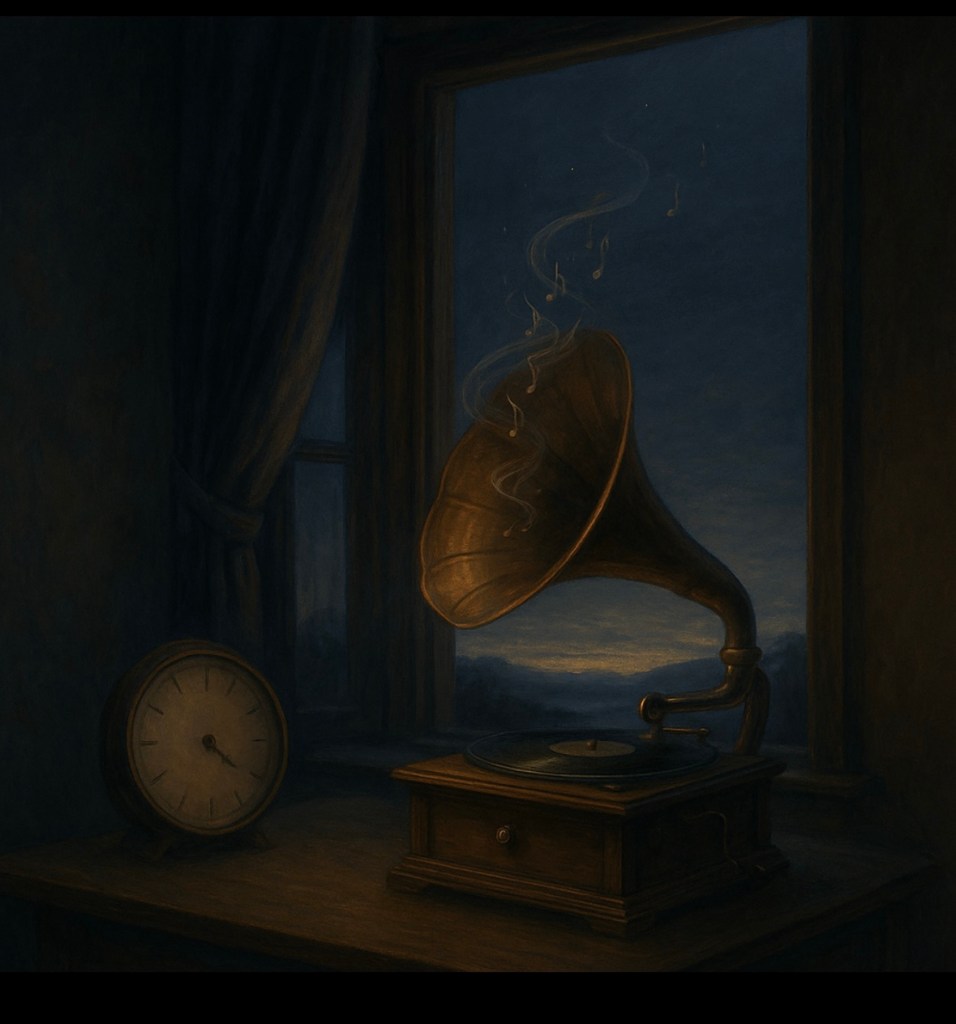
Sul confine tra notte e giorno, la musica trasforma il tempo in presenza.
Between night and dawn, music turns time into presence.
“La vita non è nel tempo..bensì è il tempo vissuto”
Aldo Masullo
C’è un tempo che non si misura. Un tempo che non scorre in avanti come una freccia, né si avvolge su se stesso come una spirale ossessiva. È il tempo dell’attesa, ma non dell’attendere qualcosa. È il tempo del vivere, del saper sostare, dell’essere. Ascoltarlo, fermarsi, starci dentro: questa è forse la forma più alta di presenza.
La musica, più di ogni altro linguaggio, sembra insegnarci proprio questo: il tempo non è un contenitore vuoto da riempire, ma un atto vivente. Un’esperienza, un’alterazione della percezione, una dilatazione dell’esserci. La musica non misura il tempo, ma ne determina il manifestarsi.
Aldo Masullo ha descritto il tempo come elemento fondativo dell’essere, non come semplice successione cronologica, ma come accadere ontologico. È nel tempo, e solo nel tempo vissuto, che si apre la possibilità della grazia: non come dono improvviso, ma come evento che attraversa il soggetto e lo trasforma, a condizione che vi si esponga e accetti il patire dell’esistenza.
Questa esposizione non è mai passiva. Comporta il rischio di sentire la lacerazione del tempo, il suo buio, il suo sfinimento, il suo dominio sovrastante. Proprio in quella lacerazione può maturare un atto di verità. Può accadere ciò che non era immaginabile, ciò che non si poteva pensare.
Giorgio Agamben, da una prospettiva diversa ma profondamente affine, definisce l’attesa come tempo puro, una sospensione che non è vuota ma carica di senso. Nell’attesa autentica non c’è progettazione né nostalgia, ma un’apertura assoluta a ciò che potrebbe venire. L’attesa non è assenza, ma una forma dell’essere. Il tempo non è mezzo, ma manifestazione.
Anche Bion, sul piano clinico, invita a una radicale rinuncia alla fretta di capire. “Senza memoria e senza desiderio” è la condizione perché un’esperienza analitica sia davvero viva. Non si tratta di sapere in anticipo, ma di lasciare che qualcosa emerga. L’ascolto si trasforma in presenza e la cura in un atto poetico.
Questi pensieri, che non si sovrappongono ma si illuminano a vicenda, fanno cogliere una verità profonda: il tempo non è una distanza da percorrere, ma una soglia da abitare.
C’è un tempo che non ha orologi. È il tempo in cui l’inconscio lavora, rielabora, disfa e ricuce senza che la mente lo controlli. È il tempo dei sogni, delle immagini infantili, delle risonanze che si intrecciano a suoni e odori. È un tempo inattuale, come lo chiama Agamben, in cui il presente convive col passato e già germina il futuro. Nella clinica psicoanalitica, quando si accoglie questa temporalità, si smette di funzionare come tecnici dell’esito e si torna a essere custodi del senso, ricercatori dell’intima connessione con il Sé. Si cura ciò che trova tempo per essere.
Quando si ascolta Mahler, la Nona Sinfonia ad esempio, soprattutto in quell’ultimo movimento che Kubelík fa evaporare come un respiro nel gelo, ci si accorge che la musica non ha urgenze, non si affretta. Respira, allarga, amplifica. Forse il senso sta proprio in quel movimento controintuitivo di abbandonarsi alla dilatazione, finché ogni possibilità di sguardo diventa possibile. Non corre verso un finale, ma si compie nello svolgersi. Come la vita. Come l’incontro analitico. Come un addio che non è ancora stato pronunciato ma che, dentro, è già avvenuto. Come un frammento d’infanzia che ritorna, non come immagine ma come tonalità affettiva che invade l’intero essere.
La musica allora non è altro che tempo trasformato in esperienza. Se siamo abbastanza quieti, abbastanza svuotati, abbastanza presenti, possiamo accorgerci che è lei ad ascoltarci.
Per Deleuze la durata non è ciò che separa gli istanti, ma ciò che li unisce in un flusso sensibile. Non è rappresentabile, non è misurabile, ma è reale. È ciò che sospende la necessità pressante della comprensione e apre uno spazio dove qualcosa può accadere senza essere previsto. La rêverie, il pensiero onirico, l’ascolto analitico, la musica: tutti questi sono luoghi di durata, non di successione. Sono luoghi in cui tempo e grazia si toccano, non nel possesso di un sapere, ma nel gesto che rinuncia a sapere prima e si espone a comprendere dopo, non secondo le modalità del capire ma secondo quelle del vedere, dell’ascoltare.
Non è un movimento verso la spiegazione, ma verso la presenza.
Forse ciò che la musica insegna, più di ogni teoria o parola, è che il tempo, il sostare, l’incontro con l’altro non si conquistano ma si abitano. È una resa volontaria, non una conquista. L’attesa non è passività, ma un atto radicale di ascolto. Ascoltare davvero significa esporsi a un tempo che non ci appartiene, ma che ci fonda.
Così si comprende perché curare non è risolvere, ma accompagnare un ritmo. E perché vivere, come amare, è sempre ascoltare il tempo dell’altro senza volerlo cambiare, senza volerlo far assomigliare a noi.
Se vuoi attraversare questo tempo anche con le note, puoi ascoltare la Sinfonia n. 9 di Gustav Mahler nella direzione di Rafael Kubelík, disponibile sulle principali piattaforme.
Grazie per aver letto e ascoltato fino in fondo.
Listening to Time. Music and the End of Waiting
“Life is not in time..rather, it is time as it is lived”
Aldo Masullo
There is a kind of time that cannot be measured. It is a time that does not move forward like an arrow, nor coil upon itself like the spiral of obsessive thought. This is the time of waiting, but not of waiting for something. It is the time of living, of knowing how to stay, of being. To listen to it, to pause, to dwell within it, is perhaps the highest form of presence.
Music, more than any other language, seems to teach us precisely this. Time is not an empty container to be filled, but a living act. It is an experience, an alteration of perception, an expansion of being. Music does not measure time; it allows time to manifest.
Aldo Masullo described time as the foundational element of being, not as a simple chronological succession, but as ontological happening. It is in time, and only in lived time, that the possibility of grace appears, not as a sudden gift, but as an event that passes through the subject and transforms them, provided that one is willing to be exposed and to accept the suffering of existence.
This exposure is never passive. It means risking the experience of the laceration of time, its darkness, its exhaustion, its overwhelming force. Yet it is precisely in that laceration that an act of truth can mature. Something unimaginable, something that could not be thought before, can occur.
Giorgio Agamben, from a different but deeply related perspective, defines waiting as pure time, a suspension that is not empty but full of meaning. In authentic waiting there is no planning or nostalgia, but an absolute openness to what might come. Waiting is not absence, but a form of being. Time is not a means, but a manifestation.
Bion, too, on the clinical level, calls for a radical renunciation of the rush to understand. “Without memory and without desire” is the condition that allows an analytic experience to be truly alive. It is not about knowing in advance, but about letting something emerge. Listening thus becomes presence, and care becomes a poetic act.
These ideas do not overlap but illuminate one another. Together they reveal a profound truth. Time is not a distance to cross, but a threshold to inhabit.
There is a time without clocks. It is the time in which the unconscious works, reworks, undoes and stitches together without being controlled by the mind. It is the time of dreams, of childhood images, of resonances woven with sounds and scents. It is an untimely time, as Agamben calls it, in which the present coexists with the past and already germinates the future. In psychoanalytic practice, when this temporality is welcomed, we cease to function as technicians of outcome and become once again custodians of meaning, seekers of a deep connection with the self. We heal what finds time to be.
When listening to Mahler, the Ninth Symphony for example, especially in that final movement that Kubelík lets dissolve like a breath in the cold, it becomes clear that music has no urgency and is in no hurry. It breathes, expands, amplifies. Perhaps its meaning lies in the counterintuitive movement of surrendering to dilation, until every possibility of vision becomes possible. Music does not rush towards an ending, but is fulfilled in its unfolding. Like life. Like the analytic encounter. Like a farewell that has not yet been spoken, but is already happening within. Like a fragment of childhood that returns, not as an image, but as an affective tone that invades the whole being.
Music, then, is nothing other than time transformed into experience. If we are quiet enough, empty enough, present enough, we may notice that it is music itself that listens to us.
For Deleuze, duration is not what separates moments, but what unites them in a sensitive flow. It cannot be represented or measured, but it is real. Duration suspends the pressing need for comprehension and opens a space where something can happen unexpectedly. Reverie, dreamlike thought, analytic listening, music: all these are places of duration, not of succession. They are places where time and grace touch, not through the possession of knowledge, but through the gesture that renounces knowing beforehand and opens to understanding afterward, not in the mode of grasping but in the mode of seeing, of listening.
This is not a movement toward explanation, but toward presence.
Perhaps what music teaches us, more than any theory or word, is that time, lingering, and the encounter with the other are not to be conquered, but to be inhabited. It is a voluntary surrender, not a conquest. Waiting is not passivity, but a radical act of listening. Truly listening means opening oneself to a time that does not belong to us, but which founds us.
In this way we understand why to care is not to solve, but to accompany a rhythm. And why living, like loving, is always listening to the time of the other without wanting to change it, without wanting to make it resemble our own.
If you wish to experience this time through sound as well, you can listen to Gustav Mahler’s Ninth Symphony conducted by Rafael Kubelík, available on the main platforms.
Thank you for reading and listening all the way to the end.
 Reverie Sonore
Lascia un commento