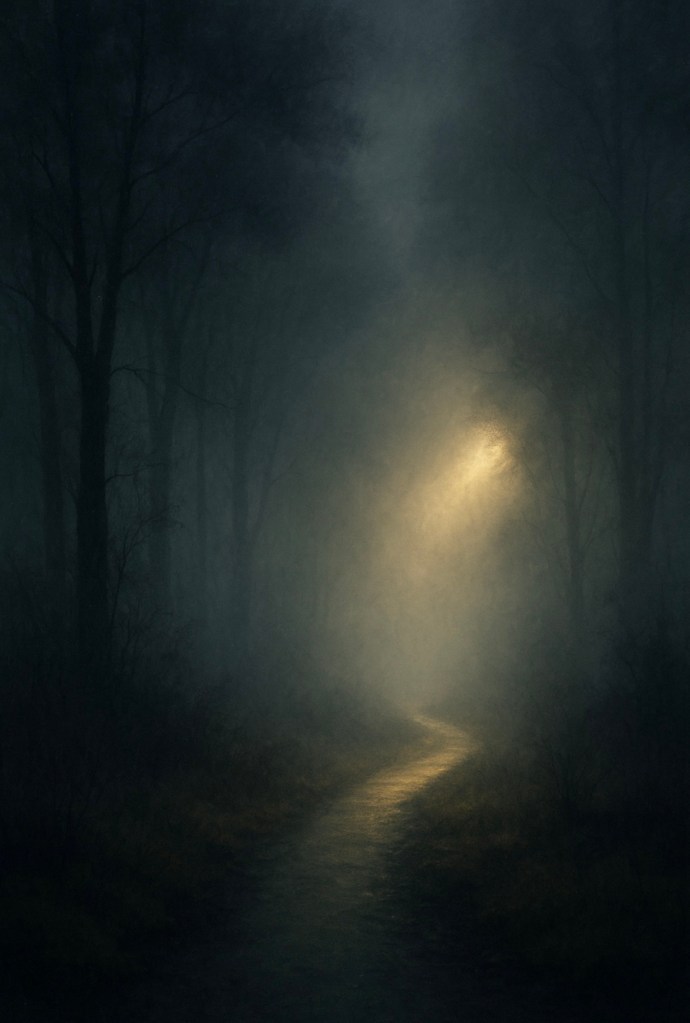
Un sentiero nella nebbia, tra ombra e luce.
A path in the mist, between shadow and light.
1. Nascita di un ascolto
Ascoltare l’integrale delle sinfonie di Mahler diretta da Rafael Kubelík significa imbattersi in due momenti che restano incisi nella memoria: l’Urlicht della Seconda Sinfonia, cantato da Annelies Burmeister con voce nuda, scura, senza orpelli, e il Primo movimento della Quinta Sinfonia, il Trauermarsch, che Kubelík trasforma in una marcia popolare, tragica e danzante al tempo stesso.
Sono due poli opposti: da un lato la preghiera intima, dall’altro la marcia collettiva. Eppure, ascoltati insieme, mostrano un’unica verità: Mahler, con Kubelík, ci parla dell’essere umano che oscilla tra il lutto e la grazia, tra la morte e la luce, tra la materia e lo spirito. Non sono solo contrasti estetici, ma due soglie dell’umano: la voce che si fa preghiera e il corpo che si fa corteo.
2. Il corpo che cammina
Il Trauermarsch non è solo una marcia funebre: sembra un corteo che attraversa il paese, una folla che avanza con passo pesante ma non privo di vitalità. Kubelík ci fa sentire il lato corporeo, quasi animale, di questo movimento. Derrida ha mostrato come l’animale non sia semplicemente “altro dall’uomo”, ma una parte di noi, il nostro limite interno. Qui la musica lo dimostra: il ritmo è quello del passo, il respiro del corpo collettivo che non si stacca mai dalla terra.
Sembra una tribù che accompagna il lutto: metà umana e metà bestiale. La psicoanalisi conosce bene questo movimento: la ripetizione corporea che diventa simbolo, senza mai smettere di essere carne.
3. La voce che sussurra
L’Urlicht è intimità pura: la voce del contralto sembra parlare all’orecchio dell’ascoltatore. È una preghiera popolare, un canto che non ha bisogno di grandi effetti per commuovere.
Qui la musica diventa cura: quello che il filosofo Gurisatti chiama “est-etica dell’esistenza”, cioè forma che educa e custodisce. In psicoanalisi questo è il momento in cui il dolore trova contenimento: non viene negato, ma accolto nella forma della parola.
4. Il mistero e il negativo
Bion chiamava “O” l’esperienza ineffabile, ciò che non possiamo ridurre a concetti. L’Urlicht è proprio questo: un varco sul mistero.
Ma il mistero non vive senza il suo opposto: il negativo. André Green ha mostrato che il negativo non è solo vuoto distruttivo, ma anche forza che organizza e struttura. Nel Trauermarsch lo sentiamo: ripetizione ossessiva, tensione, urto, eppure il movimento non collassa, resta forma.
O e negativo non sono opposti, ma due facce dello stesso limite: l’apertura al mistero e la forza che lo struttura.
5. Dalla depressione alla lingua
Julia Kristeva ci ricorda che la depressione è muta finché non trova parole. L’Urlicht fa proprio questo: prende la tristezza e la fa diventare canto semplice, quasi infantile.
Kubelík lascia che questa fragilità resti intatta: non cerca bellezza perfetta, ma una lingua nuova per il lutto. È la stessa trasformazione che la clinica psicoanalitica cerca di favorire: dare voce a ciò che non riesce a dirsi.
6. Dal particolare all’universale
Il bello è che entrambi i brani nascono da radici popolari: il Trauermarsch richiama il passo delle bande di paese, l’Urlicht viene da un lied del Knaben Wunderhorn. Eppure, con Mahler e Kubelík, diventano universali: ci parlano di tutti, di ogni vita, di ogni lutto e di ogni speranza.
È quello che Davide Lopez descriveva come l’inconscio inteso non solo come deposito privato, ma come apertura all’universale.
7. Una clinica del limite
Questi due movimenti, così diversi, compongono insieme una vera clinica del limite. Il corpo che marcia, la forma che cura, il mistero di O, il negativo che struttura, la depressione che trova lingua, l’inconscio che si apre all’universale.
La lezione è chiara: la psicoanalisi non deve solo interpretare o spiegare, ma saper custodire l’esperienza del limite, come fa Kubelík con Mahler.
Conclusione
L’Urlicht e il Trauermarsch, così come li dirige Kubelík, ci mostrano che la musica può diventare maestra di psicoanalisi: non chiudere, non saturare, ma lasciare che il dolore diventi forma, che la marcia diventi danza, che la tristezza diventi canto universale.
Così Mahler, nelle mani di Kubelík, ci insegna che anche la psicoanalisi è un’arte: un’estetica del limite, dove interpretare significa prima di tutto custodire.
ENG
The Art of the Threshold: Mahler and Kubelík between Mourning and Grace
1. Birth of a Listening
Listening to Mahler’s complete symphonies conducted by Rafael Kubelík means encountering two moments that remain etched in memory: the Urlicht from the Second Symphony, sung by Annelies Burmeister with a bare, dark, unadorned voice, and the first movement of the Fifth Symphony, the Trauermarsch, which Kubelík transforms into a popular march, tragic and dancing at the same time.
These are two opposing poles: on the one hand, intimate prayer, on the other, collective march. Yet, when heard together, they reveal a single truth: Mahler, through Kubelík, speaks of the human being oscillating between mourning and grace, between death and light, between matter and spirit. They are not merely aesthetic contrasts, but thresholds of the human: the voice that becomes prayer and the body that becomes procession.
2. The Body that Walks
The Trauermarsch is not only a funeral march: it resembles a procession crossing through the village, a crowd advancing with heavy yet vital steps. Kubelík lets us feel the corporeal, almost animal side of this movement. Derrida showed that the animal is not simply “other than man” but a part of us, our internal limit. The music demonstrates this: the rhythm is that of the step, the breath of a collective body never detached from the earth.
It resembles a tribe accompanying grief, half human and half bestial. Psychoanalysis knows this movement well: the bodily repetition that becomes symbol, without ever ceasing to be flesh.
3. The Whispering Voice
The Urlicht is pure intimacy: the contralto’s voice seems to speak directly into the listener’s ear. It is a popular prayer, a song that does not need grand effects to move.
Here music becomes care: what the philosopher Gurisatti calls an “aest-ethics of existence,” a form that educates and shelters. In psychoanalysis this is the moment when pain finds containment: it is not denied but welcomed in the form of words.
4. Mystery and the Negative
Bion called “O” the ineffable experience, what cannot be reduced to concepts. The Urlicht is precisely this: an opening onto mystery.
But mystery does not live without its opposite: the negative. André Green showed that the negative is not only destructive emptiness, but also a force that organizes and structures. In the Trauermarsch we hear it: obsessive repetition, tension, clash, and yet the movement does not collapse, it remains form.
O and the negative are not opposites, but two sides of the same threshold: the opening to mystery and the force that structures it.
5. From Depression to Language
Julia Kristeva reminds us that depression is mute until it finds words. The Urlicht does exactly this: it takes sadness and turns it into a simple, almost childlike song.
Kubelík lets this fragility remain intact: he does not seek perfect beauty, but a new language for mourning. It is the same transformation psychoanalytic work seeks to foster: giving voice to what cannot yet be spoken.
6. From the Particular to the Universal
What is striking is that both pieces have popular roots: the Trauermarsch recalls the step of village bands, the Urlicht comes from a lied in Des Knaben Wunderhorn. And yet, with Mahler and Kubelík, they become universal: they speak of everyone, of every life, of every grief and every hope.
This is what Davide Lopez described as the unconscious understood not only as a private deposit, but as an opening to the universal.
7. A Clinic of the Threshold
These two movements, so different, together compose a true clinic of the threshold. The body that marches, the form that heals, the mystery of O, the structuring negative, the depression that finds language, the unconscious that opens to the universal.
The lesson is clear: psychoanalysis must not only interpret or explain, but also safeguard the experience of the threshold, as Kubelík does with Mahler.
Conclusion
The Urlicht and the Trauermarsch, as conducted by Kubelík, show us that music can become a teacher of psychoanalysis: not closing, not saturating, but letting pain become form, letting the march turn into dance, letting sadness become universal song.
Thus Mahler, in Kubelík’s hands, teaches us that psychoanalysis is also an art: an aesthetics of the threshold, where interpretation means above all to safeguard.

 Reverie Sonore
Lascia un commento